
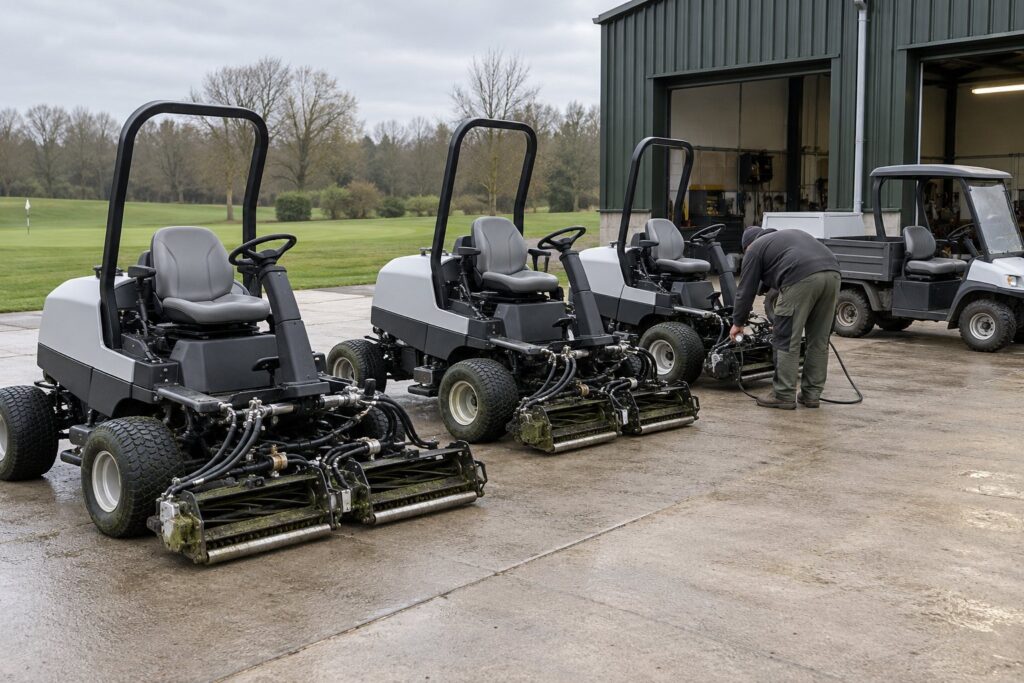
Maintenance equipment is the largest recurring capital cost most golf courses carry after the clubhouse. Greens and fairway mowers, aerators, sprayers, topdressers and utility vehicles all wear out on different cycles, and how you replace them, new, used, leased or rented, shapes both the budget and course conditions. This guide explains how golf course machinery is sold in the US and Canada and what superintendents and owners should weigh up. Compare dealers and manufacturers in our golf course machinery section.
How machinery reaches golf courses
The major brands sell through regional distributors and dealers who handle demos, delivery, warranty, parts and service. Toro golf equipment, for example, is sold by distributors such as MTI Distributing in Minnesota and, in Eastern Canada, Turf Care Products Canada, which describes itself as the exclusive Toro distributor for the region. John Deere golf equipment comes through dealers such as Revels Turf & Tractor in the Carolinas and Ohio and Beard Equipment on the Gulf Coast. Jacobsen is carried by dealers including G.C. Duke Equipment in Ontario and Prairie Turf Equipment in Manitoba.
The dealer matters as much as the brand. Check how far the nearest service branch is and how quickly a technician can reach you when a greens mower fails in July.
Build a fleet replacement plan
A fleet list makes every buying decision easier. For each machine, record its age, engine hours, condition, annual repair cost and the job it does. Then group the fleet into machines to replace this year, those with two or three seasons left, and those that can keep running. This shows owners and boards the real yearly cost of keeping the course in condition and avoids a year when several large machines fail together.
| Group | Typical machines | Where to compare |
|---|---|---|
| Mowing | Greens, tees, fairway and rough mowers; robotic mowers | Mowers and grounds care, Robotic mowers |
| Cultivation and renovation | Aerators, verticutters, overseeders, topdressers | Tools and supplies |
| Irrigation | Pumps, heads, controllers, drainage | Irrigation and drainage |
| Agronomy inputs | Fertilizer, seed, plant protection, topdressing sand | Fertilizer, seed and turf |
| Bunkers and accessories | Bunker rakes, cups, flags, markers | Course accessories |
| Vehicles | Utility vehicles, sprayers, compact tractors | Utility vehicles |
Specialist manufacturers fill particular gaps: Turfco in Minnesota makes topdressers and overseeders, Smithco makes bunker rakes, sprayers and rollers, Ventrac in Ohio makes compact tractors used for slope mowing, and Par Aide supplies course accessories and turf tools.
New, used, leased or rented
Each route suits a different situation. New equipment brings the latest efficiency and full warranty. Used equipment suits backup machines and tight budgets, and many dealers, including MTI, Revels and Prairie Turf Equipment, sell pre-owned machines. Leasing spreads the cost over a fixed replacement cycle and often bundles service. Short-term rental suits occasional jobs such as deep-tine aeration.
| Route | Best for | Watch for |
|---|---|---|
| Buy new | Daily-use machines such as greens and fairway mowers | Capital outlay; dealer service coverage |
| Buy used | Backup and secondary machines | Hours, service records, parts availability, remaining warranty |
| Lease | Whole fleets on a fixed cycle | Hour limits, return condition, what service is included |
| Rent | Seasonal or occasional work | Availability during peak aeration weeks |
Tax treatment differs between buying and leasing. In the US, equipment bought for business use may qualify for the Section 179 deduction, which IRS Publication 946 caps at $2,500,000 for tax years beginning in 2025. Canadian courses claim capital cost allowance instead. Private clubs, municipal courses and non-profits face different rules, so take advice before you choose.
Battery, hybrid and robotic machines
Electric and autonomous machines are now part of most fleet plans. MTI lists battery and hybrid equipment, and dealers such as MTE Equipment Solutions in New York sell Husqvarna robotic mowers for golf and grounds. Robots suit repetitive mowing of large, regular areas. Ask for a demo on your own property, and check how boundaries are set, how the machine handles slopes and wet turf, and what it does when golfers approach.
Safety and training
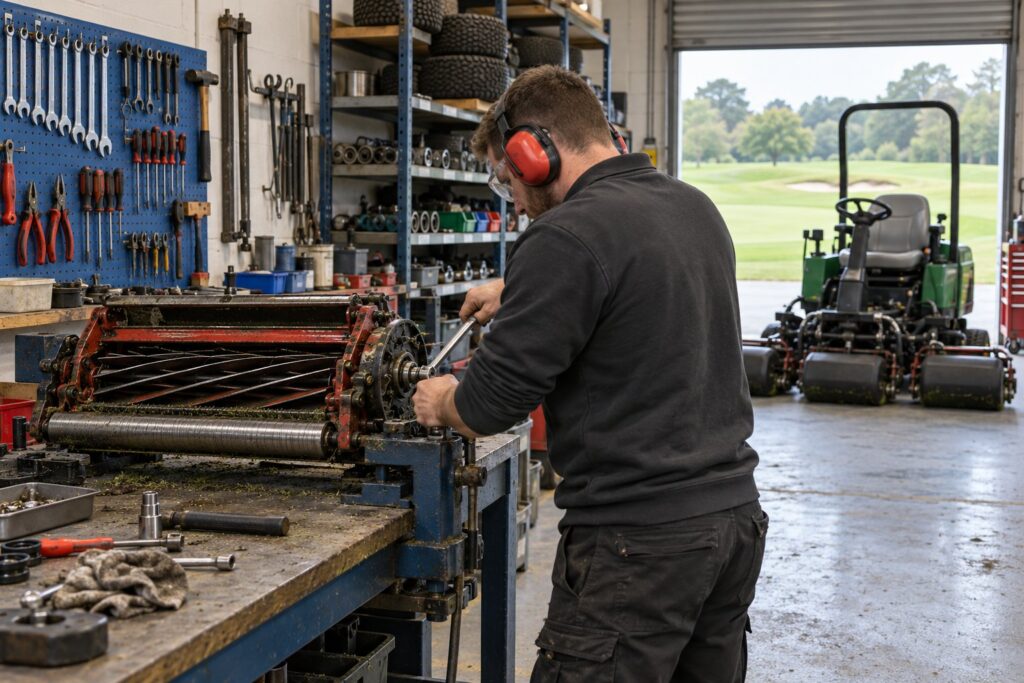
Mowers, tractors and utility vehicles are among the main hazards on a golf course. OSHA’s landscape and horticultural services guidance covers mowing and equipment hazards that apply to course maintenance crews. When you buy, ask the dealer what operator training is included, keep inspection and service records, and make sure rollover protection and seat belts are fitted and used where the manufacturer specifies them.
Questions to ask dealers
- Can we demo the machine on our own course before ordering?
- What is your breakdown response time in season, and is a loaner available?
- What will service cost over five years, and what are the intervals?
- For used machines, what are the hours, service history and remaining warranty?
- Do you offer leasing or rental, and what is included?
- What operator training comes with delivery?
The GCSAA Conference and Trade Show in January and the Canadian Golf Course Management Conference in February are the main places to see machinery side by side. To compare suppliers now, browse golf course machinery and used machinery and leasing.
Sources
- Dealer, distributor and manufacturer information from their own websites, checked October 26, 2026: mtidistributing.com, turfcare.ca, revelstractor.com, beardequipment.com, gcduke.com, prairieturfequipment.com, turfco.com, smithco.com, ventrac.com, paraide.com, mte.us.com.
- Tax: IRS Publication 946.
- Safety: OSHA, Landscape and Horticultural Services.